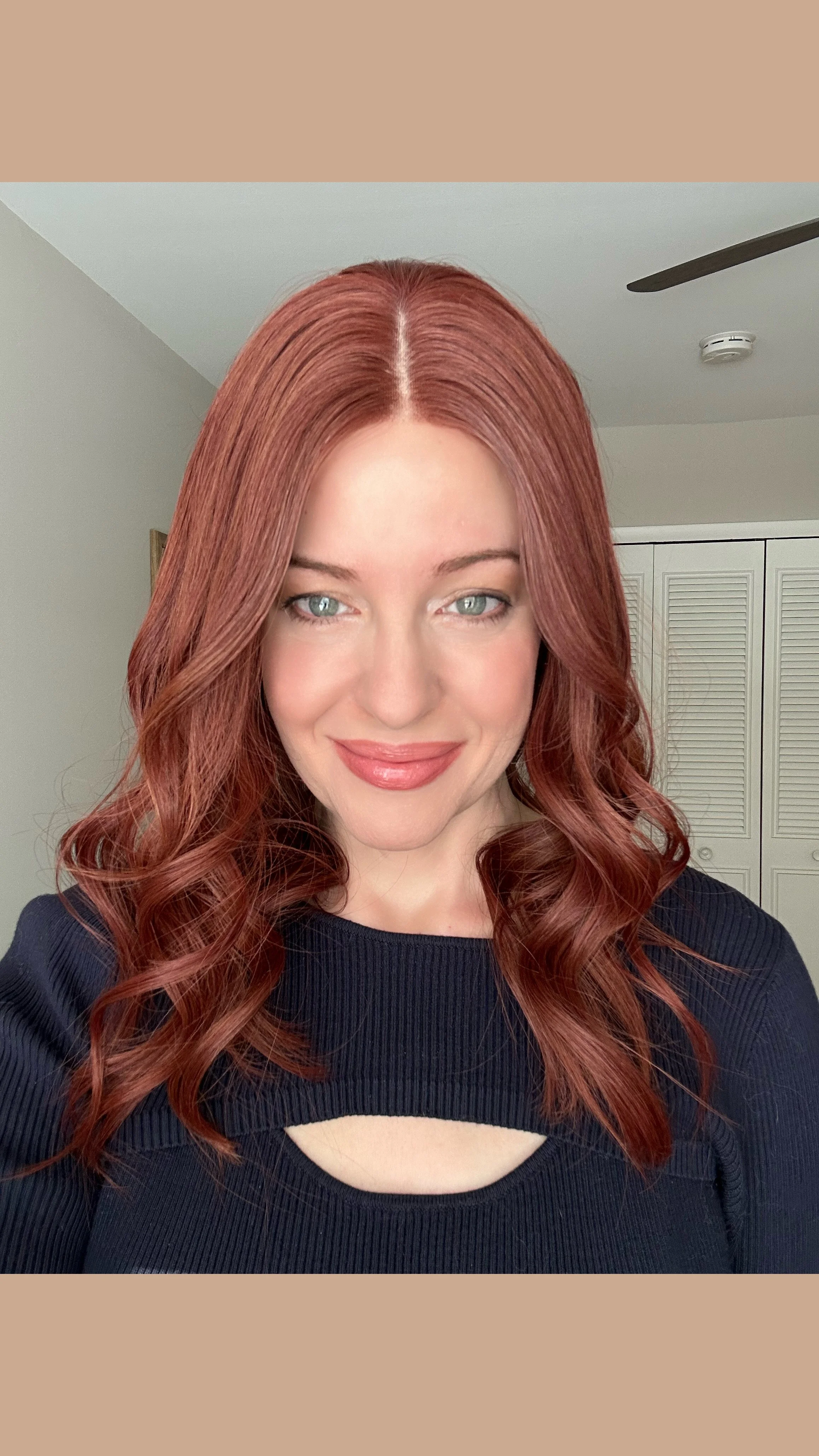
What happens when the people and community meant to protect you are the very ones who leave you feeling unwanted, isolated and unworthy?
For Sarah Schauffler, childhood was anything but ordinary. Born into a family that joined the Unification Church, commonly known as the Moonies, when she was just three months old, Sarah spent her formative years navigating a world shaped by religious control, instability, neglect and profound isolation.
Her parents joined the movement when she was an infant, and by the age of one, Sarah had been placed in a childcare centre so they could dedicate themselves to serving the church. What followed was a childhood marked by repeated abandonment, constant moves, bullying and a deeply painful sense that she didn't belong, even within her own family.
But Sarah's story doesn't end with what happened to her as a child. It is also a story about resilience, the long road to healing, learning to set boundaries, and discovering that a fulfilling life doesn't have to look the way society tells us it should.
In this episode of Shedding the Shame, I sat down with Sarah to talk about growing up in a cult, the lasting effects of childhood trauma, family estrangement, and what it really takes to rebuild your life.
Growing Up Without a Sense of Belonging
Sarah's parents joined the Unification Church when she was just three months old. At the age of one, she was placed in a facility called the Mother Center in Berkeley, California, where one woman was responsible for caring for approximately 12 toddlers whose parents had joined the movement.
Sarah remembers having an emotional meltdown over something as seemingly insignificant as not getting the pink bowl at breakfast. Looking back, she understands that it was never really about the bowl. It was about a little girl wondering where her mother was, why she was there, and why nobody seemed to care.
For the first six years of her life, Sarah was repeatedly moved between her parents, grandparents, aunts and other church members. Her parents would take her back for a period of time before leaving her with someone else again.
The constant back-and-forth created a pattern of abandonment that would follow her well into adulthood.
And the instability didn't end there. Her parents were missionaries, which meant Sarah attended five or six different schools some years, frequently moving every two or three months.
She was always the new girl. There was little opportunity to establish friendships, develop a sense of security or feel settled anywhere. But perhaps one of the most damaging aspects of Sarah's childhood was the way she was treated within the church itself.
Being Told You Don't Belong, Even Within Your Own Family
One of the most disturbing parts of Sarah's story involves the church's distinction between children born before and after a marriage was blessed by Reverend Moon.
Children born after the blessing were considered "blessed children" and were viewed as special. Children born before the blessing, like Sarah, were called "Jacob's children" and were considered to have original sin.
Imagine being a young child and being told that you were somehow less worthy than the other children around you simply because of when you were born.
Sarah experienced bullying and exclusion from other church members, including children who were supposed to be part of her community. She recalls being denied a roommate at summer camp because she wasn't a blessed child. Even when she went to her parents for help, they failed to protect her.
Her four younger siblings were all considered blessed children, creating an additional layer of division within her immediate family.
Sarah described feeling as though she didn't belong anywhere. She wasn't accepted in the outside world because she had been raised so differently, but she also wasn't accepted within the church that had shaped her entire life. The people who were supposed to provide her with community and belonging were the same people making her feel like an outsider.
It is difficult to imagine the impact that kind of rejection has on a child's developing sense of identity and self-worth.
How Childhood Trauma Follows Us Into Adulthood
Sarah was repeatedly told by her mother that she was difficult and too much. Over time, she internalized those messages and began to believe she was fundamentally unlovable.
She describes herself as an angry, loud child who would act out because she wanted someone to notice her. Her sister, on the other hand, tended to keep her feelings inside.
Both responses came from the same environment, but they looked very different.
Sarah also developed binge eating behaviours at a young age. She described food as the one friend she could count on, something she turned to when she felt alone, abandoned or overwhelmed.
The isolation and emotional neglect she experienced as a child continued to affect her relationships, self-esteem and ability to trust people as an adult.
She struggled with perfectionism, constantly feeling that she had to be the best at everything to prove her worth. She also found it difficult to develop close friendships and intimate relationships because, at a fundamental level, she believed people would eventually leave.
As Sarah explained, when your parents repeatedly leave you as a child, it becomes incredibly difficult to trust that anyone will stay.
One of the things that stood out to me during our conversation was how long these patterns can remain with us, even when we are no longer living in the environment that created them. We may leave the circumstances, but that doesn't mean we automatically leave behind the beliefs we developed to survive them.
Leaving the Church and Beginning the Long Road to Healing
By the age of 13, Sarah had started questioning what she had been taught. But recognizing that something wasn't right and actually finding a way out were two very different things.
At 18, Sarah experienced a serious mental health crisis that resulted in a two-week hospitalization. She describes experiencing hallucinations and hearing voices, with much of the episode connected to the religious beliefs and expectations she had grown up with.
After leaving the hospital, she made the decision to leave home.
It was the beginning of a long and complicated journey toward independence.
Sarah started therapy in her 20s and has continued working with therapists throughout her life. She is incredibly open about the importance of therapy, but also acknowledges that finding the right therapist can take time.
Her first experience wasn't particularly helpful. She recalls sitting with a therapist who would simply listen while she talked, without offering the guidance or feedback she needed.
Over time, she learned that finding the right fit mattered.
She also shared something particularly important about trauma: the tendency to minimize our own experiences because we believe someone else has had it worse.
For years, Sarah struggled to fully acknowledge her childhood trauma because she hadn't experienced some of the things she considered to be the worst forms of childhood abuse.
It took her therapist helping her understand that trauma isn't a competition.
She had experienced abandonment, neglect, bullying and emotional abuse. Those experiences mattered, regardless of what someone else had endured.
You don't need to have experienced the worst thing imaginable to deserve support, compassion and healing.
Family Estrangement, Boundaries and Learning to Choose Yourself
Another significant part of Sarah's healing journey has involved her family relationships.
Her family remains deeply fractured. Two of her brothers are estranged from their parents, and Sarah has been estranged from her sister for seven years.
During our conversation, I shared something I've come to believe through my own experiences with family estrangement: sometimes people like you better when you're broken.
When you're the person who needs them, who questions yourself, who accepts poor treatment and doesn't challenge the dynamic, they may be comfortable with the relationship.
But when you begin doing the work, recognizing your worth and setting boundaries, the relationship changes. Suddenly, you're difficult. You've changed. You're no longer the person they were accustomed to having around, and sometimes, that means people leave.
Someone else's discomfort with your boundaries doesn't mean those boundaries are wrong.
Sarah also spoke about her parents, who have acknowledged and apologized for the pain she experienced growing up. However, they remain active members of the church, making it difficult for them to fully acknowledge the decisions they made or take accountability for the role the movement played in her childhood.
It's a complicated reality when the people who hurt you are also people you love, and healing doesn't necessarily mean maintaining a relationship with them.
You Don't Have to Follow the Life Plan Society Gave You
One of my favourite parts of this conversation was hearing Sarah talk about where she is today.
For a long time, she believed her life was supposed to follow a particular path. She expected to get married and have children, and spent years trying to make relationships work, sometimes trying to turn the wrong person into the right person simply because she wanted the life she thought she was supposed to have.
Eventually, she stopped chasing that expectation.
Today, Sarah is happily single, lives with her beloved pets, has a home, a network of close friendships and a career that gives her purpose.
It took a long time to get there.
At 37, Sarah went back to school to complete her undergraduate degree. She had struggled academically as a child and had even failed third grade because she couldn't read. But she made a decision to become a teacher.
She completed her degree, earned her master's and eventually achieved National Board Certification. She didn't begin teaching until she was 40. Today, she loves her work as an English teacher and also runs her alternative hair business, Locks of Confidence, where she educates and supports women navigating hair loss and alternative hair.
Both give her a sense of purpose.
She also spoke about the importance of accepting the life you have rather than constantly grieving the life you thought you would have. That doesn't mean you never mourn what didn't happen. Sarah acknowledges that she went through a grieving process around not having children or the family she once imagined.
But she has also learned to appreciate the freedom, independence, friendships and stability she has built.
At 53, she says she is happier than she has ever been, and I love that reminder that our lives don't have to follow a predetermined timeline to be meaningful or fulfilling.
You Can Grieve Your Past and Still Be Proud of Who You've Become
Something said Sarah during our conversation that really resonated with me was that it took her a long time to own her trauma.
When you grow up in an environment where your needs aren't prioritized, where you're made to feel like you're difficult or too much, it's easy to internalize the belief that something is wrong with you. You may spend years trying to prove your worth, seeking validation, striving for perfection or accepting relationships that reinforce the very beliefs you're trying to escape.
Sometimes, even when you begin healing, you question whether what happened to you was really that bad.
But your pain doesn't need to be validated by someone else's suffering.
You are allowed to acknowledge what happened. You are allowed to grieve what you didn't receive, and you are allowed to build a life that looks completely different from the one you were given.
For Sarah, healing has meant therapy, building healthy friendships, removing toxic relationships, finding purpose and learning to embrace the life she has rather than constantly comparing it to the one she thought she should have.
It hasn't been a straight line, and it certainly hasn't happened overnight, but she has found a place of peace that once felt impossible.
What Does Shedding the Shame Mean to Sarah?
At the end of our conversation, I asked Sarah what shedding the shame means to her personally. Her answer brought together so many of the themes we discussed.
For Sarah, it means letting go of the shame surrounding her trauma, her binge eating, her childhood and the deeply ingrained belief that she was never good enough. It means learning to love herself on her own terms.
She also reflected on something I say at the beginning of every episode: You are not too much, and you are not drama. Those words resonated with her because she had spent so much of her life being told she was difficult, dramatic and too much.
I think that's something many women can relate to.
Women who speak up, advocate for themselves, challenge unhealthy dynamics or refuse to accept poor treatment are often labelled difficult. But there is a difference between being difficult and refusing to make yourself smaller to keep other people comfortable.
Sarah's story is a reminder that healing is possible, even when it takes decades. That setting boundaries can be an act of self-preservation. That you can find purpose and belonging later in life, and that the life you build for yourself can be meaningful, even if it looks nothing like the one you originally imagined.
You don't have to spend the rest of your life carrying the shame of what happened to you, and you were never too much.
Want to learn more about Sarah’s journey and insights? Check out her full episode on Apple, Spotify, or YouTube!
Content note: This episode discusses cults, childhood neglect, emotional abuse, bullying, disordered eating and mental health crises.
