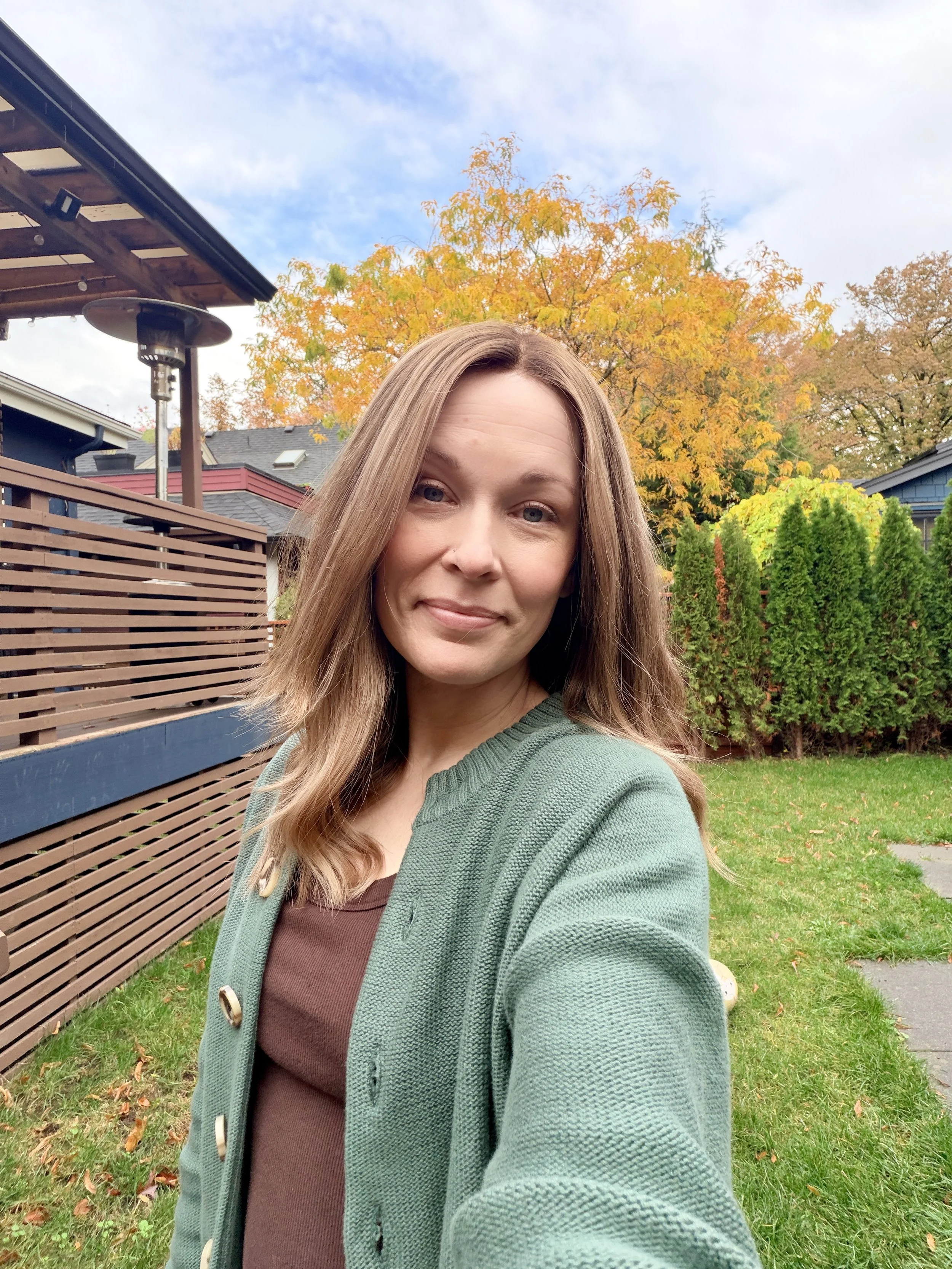
I started this podcast for me.
For the 15-year-old girl who started losing her hair and felt completely alone. For the 33-year-old woman who experienced two miscarriages and wondered if she'd ever become a mom. For the woman who walked away from a toxic family dynamic, lost her job, questioned her identity, and spent years believing that somehow, she was the problem.
I started Shedding the Shame because I know what it's like to carry things quietly. To become really good at looking okay on the outside while feeling completely alone on the inside. To believe that if I could just keep the hard parts of my life hidden, maybe I could avoid the judgment, the questions, and the uncomfortable conversations.
But keeping things quiet doesn't make the shame go away. Sometimes, it just makes us feel more alone in it.
And I'm tired of pretending I'm fine.
The things I carried
At 15, I started losing my hair.
I had no idea that an estimated 30 million women in the United States alone experience androgenic alopecia, the type of hair loss I have. All I knew was that something about my appearance was changing, and I didn't know how to talk about it. I felt unlovable, ugly, and deeply ashamed of how I looked. At an age when fitting in feels like everything, I felt different in a way I didn't know how to explain.
At 17, my father went to jail.
I was living in a small town where gossip travelled, and I had to navigate one of the most insecure periods of my life while feeling exposed to other people's opinions. I just wanted to be a teenager and fit in. At the same time, home wasn't a place where I felt emotionally safe. I lost the person I had trusted most, and I was left trying to make sense of things I didn't have the words or support to process.
As I got older, I began to understand the impact of growing up with an emotionally abusive parent. For years, I had been gaslit and emotionally manipulated; made to believe I was the problem whenever I spoke up about how I was being treated. It wasn't until I graduated and moved out that I began to see just how unhealthy those dynamics had been. When you're raised in an environment where your feelings are dismissed and your reality is constantly questioned, it can take years to recognize that the problem wasn't you.
At 33, I experienced two miscarriages back to back.
The heartbreak of those losses broke me for a long time. I wondered if I would ever become a mom. I felt like my body had betrayed me, and alongside the grief, I carried a shame that was difficult to explain. Pregnancy loss can be an incredibly lonely experience, especially when you're struggling with your own emotions while trying to navigate a world that doesn't always know what to say.
At 37, I made the decision to cut off contact with my parents.
I refused to model that toxic relationship as something acceptable to my daughters. I wanted them to understand that love doesn't require you to accept mistreatment, and that protecting yourself can sometimes mean making incredibly difficult decisions. But choosing to protect myself and my family came at a cost. I lost contact with most of my extended family for years. I was called cruel, selfish, and ungrateful for finally drawing a boundary. It was a painful reminder that when you stop accepting the role people expect you to play, they don't always understand your decision. Sometimes, they judge you for it.
Then, at 41, I was laid off from my biotech job.
I was completely blindsided. In the blink of an eye, I lost something that had been a huge part of my identity. I was out of work for over a year, and I struggled with intense shame and embarrassment. I questioned my value and what I had to offer. I felt like I should have been able to figure things out faster, move on sooner, and somehow make the experience look less difficult than it was.
Looking back, I can see how often shame showed up during the moments when I was already hurting.
Hair loss. Family trauma. Pregnancy loss. Estrangement. Losing my job.
Different experiences, different stages of life, but a familiar feeling: the belief that something about my circumstances made me less worthy, less lovable, or somehow less than other people.
Sso much of that shame was never mine to carry in the first place.
What happens when we finally speak about it?
For a long time, I kept these experiences to myself. Some were too painful to talk about. Others felt too personal, too complicated, or too likely to invite judgment.
I learned how to keep moving forward. I learned how to show up, get things done, and make it look like I was okay. But there's a difference between moving forward and actually processing what you've been through.
When we don't talk about the hard things, it's easy to believe we're the only ones experiencing them. We see other people's lives from the outside and compare our messy, complicated reality with what looks like their perfectly put-together version of life.
We assume everyone else is coping better. That we're the only ones struggling. That our experiences are somehow too uncomfortable, too embarrassing, or too difficult for other people to understand.
Then something shifts when we finally say the thing we've been holding inside.
We tell someone about our hair loss, and they say, "Me too." We talk about miscarriage, and someone shares the loss they've never felt comfortable discussing. We admit that we've stepped away from a family relationship, and someone else finally feels less alone in their decision to protect their own peace.
We talk about the experience we've spent years trying to hide, and suddenly, we're not carrying it entirely by ourselves.
That moment matters.
Not because speaking about something magically makes the pain disappear, but because it reminds us that our experiences don't make us broken, and we don't have to navigate them in isolation.
Why I created Shedding the Shame
That's why I created Shedding the Shame.
I wanted to make space for the conversations that don't always happen around the dinner table, in friendships, or on social media. The conversations about the parts of life that are complicated, painful, messy, and deeply human.
We talk about hair loss, infertility, miscarriage, estrangement, divorce, mental health, body image, friendship breakups, and so much more.
These are experiences that can change how we see ourselves. They can affect our relationships, our confidence, and the stories we tell ourselves about who we are and what we deserve.
And yet, so many women feel pressure to keep these experiences quiet. To make them sound less painful. To explain away their decisions. To reassure everyone else that they're okay, even when they're not.
I don't want this podcast to be another place where we feel pressure to have everything figured out.
I want it to be a space for real conversations. Not perfect ones, polished stories with neat endings, or stories where every painful experience is wrapped up in a lesson and a silver lining.
Sometimes, healing is complicated. Sometimes, we're still angry. Sometimes, we haven't found meaning in what happened to us. Sometimes, we're still figuring out what comes next.
We should be allowed to talk about those experiences, too.
You don't need to be an expert, have a platform, or know exactly how to explain what you've been through. You just need a story and the willingness to share it, when you're ready.
When one woman speaks, she can give another woman permission to do the same.
This is for the woman who thinks she's the only one
I created this podcast for the younger versions of myself who felt alone, ashamed, and unsure whether anyone would understand. But I also created it for the woman listening who has been carrying something quietly for years.
The woman who feels embarrassed about her circumstances. The woman who questions whether she made the right decision. The woman who looks like she has it all together but is struggling behind closed doors. The woman who has been told, directly or indirectly, that her experience is too much, too uncomfortable, or something she should keep to herself.
I want you to know that you don't have to turn your pain into a positive story to make it worth sharing. You don't have to justify your boundaries, explain your grief, or prove that you've moved on. You don't have to be the only one who knows what you've been through.
I know what it's like to feel intense shame for things that weren't your fault. I know how much energy it takes to carry those feelings, and how lonely it can be when you believe you have to carry them alone.
It's time to start letting that shame go.
Not by pretending the hard things didn't happen, but by allowing ourselves to talk about them. By recognizing that what we've experienced is part of our story, not a measure of our worth.
Shedding the Shame is my invitation to have those conversations together.
If you've ever felt alone in something heavy, I hope you'll find a little more connection here. Listen to the podcast. Share an episode with someone who might need it. If you have a story you'd like to tell, consider applying to be a guest.
You never know who might need to hear it.
Let's shed the shame together.
